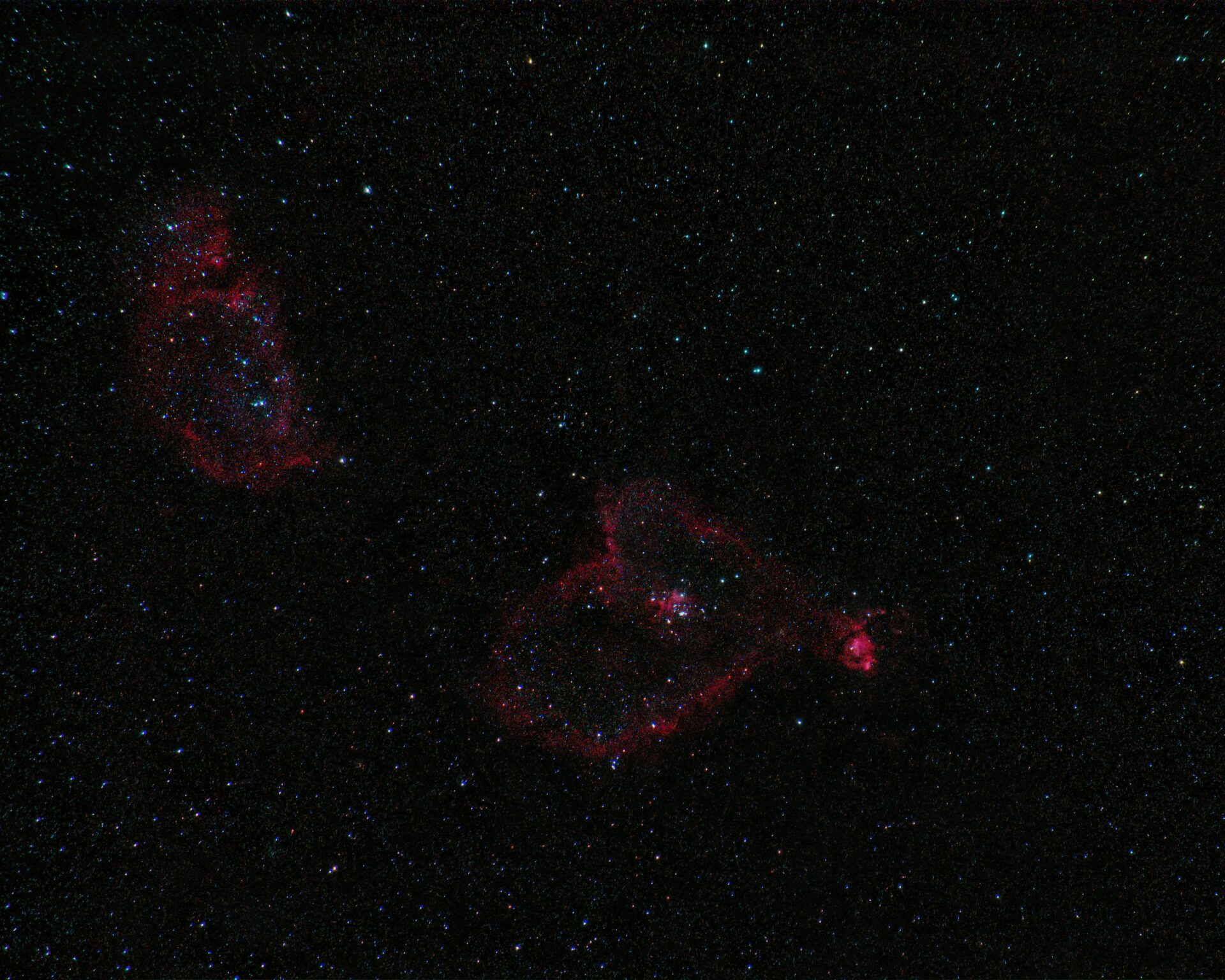
“Why do patterns in the form of ideas or physical things repeat?”
- The I Ching (patterned change)
- The Axial Age (synchronized cognitive development)
- Jung (archetypal structures)
- Turing patterns (mathematical emergence)
- Dark matter (invisible structuring forces)
- Systems theory (interdependence)
- Psychological development (inner evolution)

The Pattern that Repeats Beneath Belief
What the I Ching, the Axial Age, Dark Matter, and Turing Patterns Reveal About Consciousness
Why do similar ideas appear across cultures that never met?
Did ancient China actually speak of Yin and Yang while Greece spoke of opposites in tension?
Why did multiple civilizations simultaneously awaken during the Axial Age?
Why does modern psychology rediscover principles embedded in ancient spiritual systems?
Perhaps the better question is this:
What if human wisdom repeats because nature itself repeats?
What if the evolution of belief, philosophy, and psychology follows patterns similar to those found in physics, biology, and mathematics?
If that is true, then the convergence of ideas across history is not coincidence — it is emergence.
And emergence is predictable.

Patterns that Repeat Are Not Accidents
In the natural world, patterns that repeat arise spontaneously.
Snowflakes crystallize in symmetry while Galaxies spiral.
Similarly, Coral branches into fractals as Animal coats form spots and stripes.
In 1952, mathematician Alan Turing published a paper showing how simple chemical reactions can generate complex patterns. These are now called Turing patterns.
Stripes on zebras.
Spots on leopards.
Ripples in sand.
They arise not because someone designs them, but because systems under tension self-organize.
Two forces interact:
- Activation
- Inhibition
Sound familiar?
It mirrors Yin and Yang, dialectics in Greek philosophy, as well as psychological conflict leading to integration.
Nature produces structure from tension.
Perhaps consciousness does too.

The I Ching as a Pattern Language
The I Ching describes 64 hexagrams — each representing a moment in transformation.
Conflict.
Waiting.
Breakthrough.
Return.
Each hexagram is built from patterns that repeat alternating Yin (broken) and Yang (solid) lines — which are dynamic opposites.
The text does not predict events; rather, it maps process.
And process is what science studies.
Modern complexity theory tells us that systems move through phases:
- Stability
- Instability
- Reorganization
- Emergence
The I Ching describes the same sequence symbolically.
They may use different languages, but each contains the same pattern recognition.
The Axial Age as a Developmental Threshold
Around 800–200 BCE, multiple civilizations independently turned inward:
- Greek philosophy emerged.
- Hebrew prophetic ethics intensified.
- Chinese Confucian and Taoist systems flourished.
- Indian spiritual psychology deepened.
Karl Jaspers called this the Axial Age.
Why did it happen everywhere at once?
One practical explanation was that civilizations had ultimately reached similar levels of social complexity.
When population density, trade networks, and political scale increase, myth alone cannot regulate society. Ethical reflection becomes necessary.
Just as Turing patterns appear when chemical systems reach certain thresholds, philosophical introspection may arise when societies reach cognitive thresholds.
It may not be mystical synchronization as much as it is developmental emergence.

Dark Matter and Invisible Structure
Modern physics tells us that roughly 85% of the universe’s mass is invisible.
This “dark matter” does not emit light. We cannot see it directly. Yet galaxies hold together because of it.
Without dark matter, visible matter would disperse.
We cannot yet fully explain what dark matter is — but we know it structures reality.
This is a useful metaphor for psychological and civilizational development.
Much of what structures human thought is invisible:
- Unconscious archetypes
- Cognitive biases
- Emotional regulation systems
- Cultural myths
- Developmental stages
They function like psychological dark matter.
We do not see them directly.
But they shape everything.
When Jung proposed a collective unconscious, he was suggesting that beneath individual thought lies shared structuring pattern.
Not supernatural — structural.
Tension Generates Order
Turing patterns arise when two forces push against each other.
The I Ching is built on Yin and Yang tension.
Greek dialectics relies on thesis and antithesis.
Hebrew prophetic literature balances justice and mercy.
Psychologically, growth occurs through tension:
- Independence vs belonging
- Control vs surrender
- Stability vs transformation
When systems experience stress, they either collapse or reorganize at a higher level.
This is true in ecosystems, brains, and civilizations.
Conflict is not failure.
It is catalytic.

Why Similar Ideas Arise Independently
Now we can answer the original question practically.
Similar ideas appear across civilizations because:
- Humans share similar nervous systems.
- Humans live in the same patterned universe.
- Social complexity triggers similar developmental thresholds.
- Systems under tension generate predictable forms.
It is convergent evolution of consciousness.
Just as wings evolved independently in birds and bats, philosophical introspection may evolve independently in societies reaching similar complexity.
No conspiracy.
No mystical telepathy.
Just patterned emergence.
Systems Theory and Interdependence
Modern ecology shows that no organism exists independently.
Everything is networked.
Similarly, systems theory demonstrates that behavior arises from relationships within systems — not isolated parts.
Ancient Chinese cosmology emphasized relational balance rather than isolated substance.
The I Ching describes change as relational transformation.
Modern neuroscience shows that identity itself is relational — shaped by attachment, environment, and feedback loops.
We are less solid than we think.
More dynamic than we realize.

Are We in Another Threshold?
Look at current global conditions:
- Technological acceleration
- Ecological instability
- Political polarization
- Identity fragmentation
- Global interconnection
These resemble threshold conditions.
Systems under pressure reorganize.
We see resurgence of:
- Mindfulness and meditation
- Trauma-informed psychology
- Interest in indigenous knowledge
- Integration of science and spirituality
- Systems thinking in business and ecology
This feels Axial.
Not because prophets appeared simultaneously —
but because global complexity demands integration.
We cannot solve 21st-century problems with 18th-century metaphysics.
The mechanistic worldview is insufficient for an interconnected planet.
Psychological Relevance: Your Inner Axial Moment
This is not abstract history.
Each individual undergoes similar thresholds.
A person begins in inherited belief (mythic stage), which then develops personal morality. Eventually they find rational independence, and then existential crisis.
That person then goes through integration — if they do the work.
Spiritual depth work is patterned emergence at the personal level.
Crisis precedes breakthrough.
Disorientation precedes reorganization.
Shadow precedes integration.
Your nervous system reorganizes under stress, your worldview reorganizes under contradiction, and your identity reorganizes under loss.
Just like civilizations.

The Practical Takeaway
If patterns that repeat happen across nature, biology, and culture, then we can work with pattern instead of fighting it.
Here are practical implications:
1. Expect Tension within Patterns that Repeat
Growth always involves competing forces.
Do not interpret conflict as failure.
Interpret it as activation + inhibition seeking reorganization.
2. Respect Invisible Structure of Patterns that Repeat
Just because something is unseen does not mean it is unreal.
Unconscious beliefs, cultural narratives, attachment patterns — these are psychological dark matter.
Examine them.
3. Recognize Thresholds
When your life feels unstable, you may be at a developmental threshold.
Stability → instability → reorganization → integration.
This is not collapse.
It is emergence.
4. Think Systemically with Patterns that Repeat
Your problems are rarely isolated.
They are relational.
Family systems.
Work systems.
Cultural systems.
Shift the system, not just the symptom.
5. Integrate Opposites
Yin without Yang stagnates.
Yang without Yin burns out.
Logic without intuition is brittle.
Emotion without structure is chaotic.
Mature consciousness integrates polarity.
The Deeper Synthesis of Repeating Patterns
The I Ching symbolically mapped patterned change.
Turing mathematically mapped patterned emergence.
Physics reveals invisible structuring forces.
Psychology reveals unconscious structuring forces.
History reveals repeating developmental phases.
These are not separate domains.
They are layers of the same insight:
Order emerges from dynamic tension within structured systems.
When ideas repeat across cultures, it is not plagiarism.
It is pattern recognition by minds embedded in patterned reality.

Why Patterns that Repeat Matters Now
We are not just inheritors of wisdom traditions.
We are participants in evolutionary pattern.
The integration of East and West, science and spirituality, reason and intuition — this is not cultural fashion.
It is developmental necessity.
If the universe itself is structured by invisible forces and patterned emergence, then consciousness likely is too.
The question is not whether there are patterns that repeat.
They do.
The question is whether we recognize them early enough to cooperate with them.
Because systems that resist necessary reorganization fracture.
Systems that adapt reorganize at higher coherence.
This applies to galaxies.
It applies to ecosystems.
It applies to civilizations.
And it applies to you.
Closing Reflection
Perhaps wisdom repeats not because cultures copy one another —
But because reality has structure.
And when human beings look deeply enough — into nature, into psyche, into society — they encounter patterns that repeat.
The I Ching saw it symbolically.
Turing described it mathematically.
Physics measures it cosmologically.
Psychology maps it internally.
Different languages.
Same pattern.
And we are living inside it, art imitating life imitating art again.

Leave a Reply