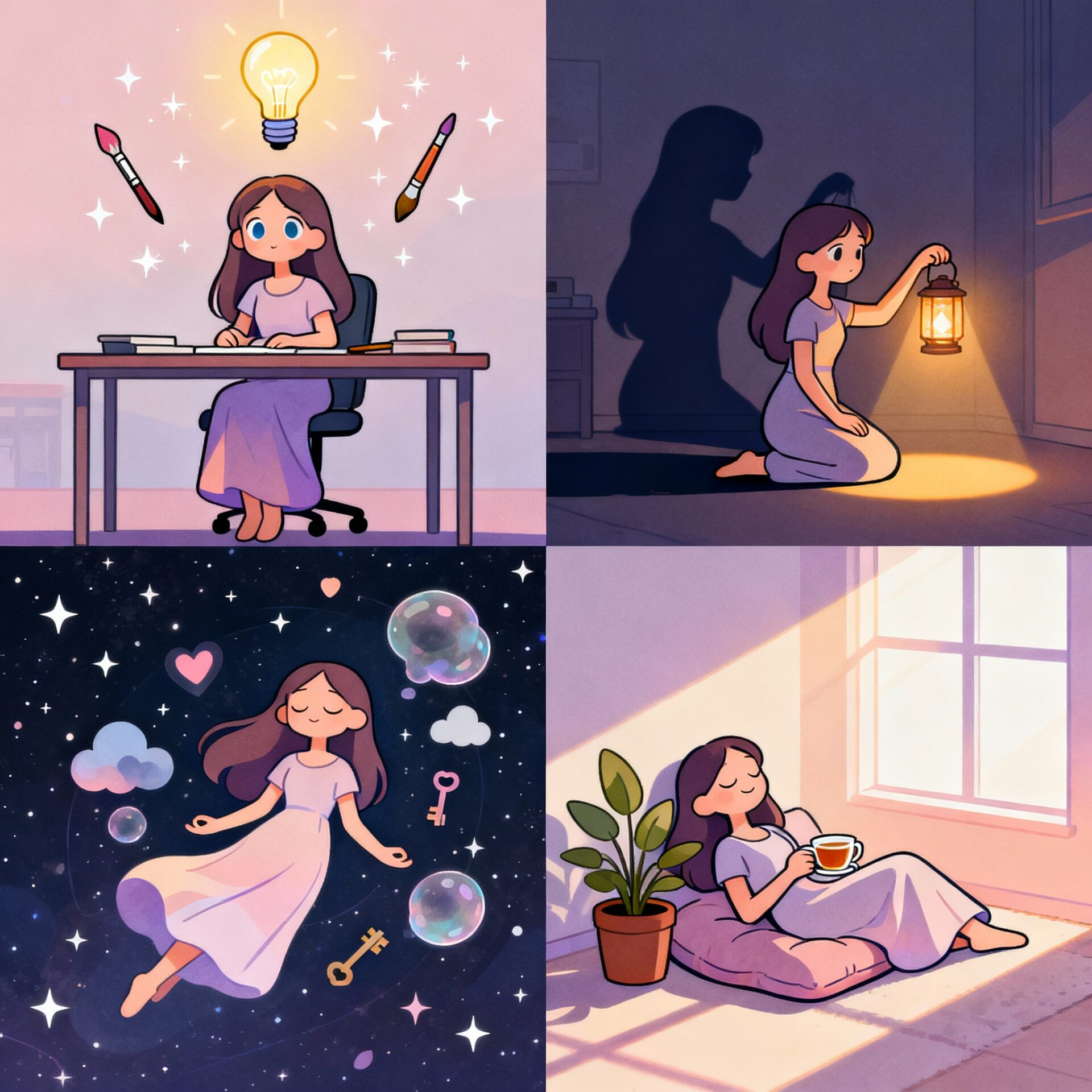
Seed Keyword: Spiritual Growth
LSI Keywords: creative expression, self-awareness, emotional healing, unconscious mind, psychological resilience, spiritual practice, personal development, meaning-making, self-discovery, personal transformation, emotional balance, authentic living, soul connection, mindful self care, individuation, inner peace, integrative therapy, holistic wellbeing, mental health, positive psychology, reflective practice

Introduction:
Most of us think of spirituality as something lofty or otherworldly — meditation, rituals, stillness. But the real work of spirituality often happens inside the messy, creative, deeply human spaces of our minds. When we slow down enough to listen, our depth psychology — the layers beneath the surface of who we think we are — starts to speak.
The Spiritual Depth Movement and this article honors this dialogue. We usually focus on four essential forces: Creative Flow, Shadow Work, the Unconscious, and Self-Care. Each of these offers a key to understanding who we are beneath our habits, masks, and fears — and together they reveal a map for healing and growth. We will share reasons that these particular tools help you with digging deep into your spiritual matters while supporting recovery.
1. Creative Flow:
The Soul in Motion
When we’re creating — painting, dancing, writing, gardening, or simply daydreaming — something larger than our conscious self begins to move through us. Psychologist Mihaly Csikszentmihalyi called this state flow, a moment when the ego steps aside and life itself expresses through us.
In depth psychology, creative flow is not just art — it’s communication with the unconscious. It’s how the inner world sends messages up through symbols, colors, and metaphors.
Why it matters for spiritual growth:
- It bypasses rational defenses and gives voice to hidden truths.
- It lets us experience unity — the merging of self and spirit.
- It transforms pain into meaning.
Why Creative Flow Matters
Creative flow is a gateway to spiritual growth because it helps us break free from habitual thought patterns and discover new possibilities. When you get lost “in the zone” painting, writing, or solving problems, the barriers between your deeper intuition and your everyday mind fall away. Creative practice turns the spiritual journey into something living, embodied, and joyful—sparking insights about your authentic self. Real-life example: many people notice their best ideas appear while daydreaming, doodling, or engaging in play. mysolluna+1
Ways to Cultivate Creative Flow
- Morning pages (freewriting)
- Doodling without expecations
- Unstructured movement/ dance
Try “automatic art” — draw or write without planning. Let the hand move before the mind judges. What emerges is your psyche speaking in color and form.
You might also consider losing your inhibitions by dancing with your favorite music on a dance floor, dancing privately in your room, or singing in a karaoke club or singing privately in your shower.

2. Shadow Work:
Embracing All Parts of Yourself; The Light Behind the Darkness
Our shadow is the collection of traits, emotions, and memories we’ve pushed away because they didn’t fit our image of who we’re “supposed” to be. Jung called it the “dark side of the personality,” but it’s not evil — it’s simply unacknowledged.
Why it matters for spiritual growth:
- It reconnects us with wholeness by integrating what we’ve denied.
- It transforms shame into power, and judgment into compassion.
- It reveals hidden creative energy trapped in repression.
Shadow work asks us to look honestly at the parts of ourselves that we have rejected, denied, or judged—our fears, resentments, and impulses. By bringing these hidden aspects into the light, we can foster real self-acceptance, empathy, and inner peace. This deep self-awareness supports authentic living and more harmonious relationships. damorementalhealth+1
Shadow Work Benefits
- See the unconscious patterns driving your choices
- Improve emotional resilience and relationships psychologytoday+1
- Reduce inner conflicts
Workshop that shadow:
- Journal about resentment or envy and tracing its roots
- When you feel triggered, pause and ask: What is this emotion trying to teach me about myself? The shadow doesn’t want to destroy — it wants to be seen.

3. The Unconscious:
Source of Depth and Integration – The Hidden Architect
The unconscious is the great underground river shaping our thoughts, dreams, and intuitions. It’s the storehouse of memories, archetypes, and instincts — both personal and collective.
In spirituality, connecting with the unconscious means listening to the deeper intelligence of the psyche, not just the voice of the rational mind.
Why it matters for spiritual growth:
- It bridges psychology and mysticism — the inner and outer worlds.
- It reveals patterns that repeat until healed.
- It expands our perception of what “self” really means.
Our unconscious mind shapes our reactions, dreams, and emotional triggers, often outside our awareness. In depth psychology, especially Jung’s tradition, bringing unconscious material into consciousness—such as unhealed wounds or forgotten talents—is called individuation. This process fosters wholeness and authenticity, helping us move past self-sabotage or repetitive life patterns. simplypsychology+1
Exploring the Unconscious
- Notice and reflect on strong emotional reactions
- Explore dreams and symbols
- Therapy or guided meditation to uncover past influences
Putting your Unconscious into Practice:
- Realize that a childhood experience impacts adult relationships and choosing to address it.
- Keep a dream journal. Write first thing each morning. Notice repeating symbols or emotions — these are your psyche’s breadcrumbs leading home.

4. Self Care:
The Foundation of Spiritual Practice
The Ground of Being
While creative flow and shadow work help us explore inner depth, self-care anchors us in the body. It’s how we make spiritual work sustainable.
In depth psychology, self-care isn’t indulgence — it’s containment. It creates the emotional and physical stability needed for transformation.
Why it matters for spiritual growth:
- It calms the nervous system so deeper work can unfold safely.
- It teaches boundaries — knowing when to rest, not just when to push.
- It honors the body as part of the spiritual journey, not separate from it.
Self care isn’t selfish; it’s the engine that nourishes your soul, body, and mind. Practices like mindful eating, movement, sleep routines, and gratitude rituals build emotional balance and resilience. Spiritual self-care specifically helps quiet inner turbulence, clarify your true desires, and integrate holistic well-being.coriechu+1
Self Care Strategies
- Create daily rituals (gratitude, mindful tea drinking)
- Build a “sacred space” at home for reflection
- Engage in spiritual practices (prayer, meditation)
- Prioritize nutritious food, movement, and restreddit+1
- Create a daily ritual of grounding — a walk, tea ceremony, or mindful breath. Think of it as returning your soul gently to its container.
Topics for Further Exploration
To deepen spiritual and psychological growth, consider working with these areas:
- Meaning-making: What gives your life purpose? How do you want to be remembered? therapyroute+1
- Self-exploration questions: Use guided worksheets to clarify your values and beliefs. positivepsychology
- Legacy and hope: Examine your beliefs about hope, legacy, and the journey through challenges. therapyroute
- Therapeutic support: Sometimes deeper insight and healing require the help of an empathetic counselor or therapist. therapyroute

The Missing Fifth Element: Relationship
If we look closely, these four elements form a circle — but something lives in the center: relationship.
Our connection to others, to nature, to our communities, and to the world mirrors our connection to ourselves. Spiritual depth isn’t isolation — it’s interbeing. We grow by seeing the divine in others, even when their shadows meet ours.
Other areas for deeper work might include:
- Embodiment: How emotions live in and move through the body.
- Time & Memory: Understanding how the past quietly shapes the present.
- Symbolic Living: Reading life as a dream — what does the world reflect back to you?
- Ritual & Integration: How to make inner insight part of daily life.
By using creative flow, shadow work, unconscious exploration, and self care, you build a toolkit for spiritual growth and integrated self-discovery. Each practice unlocks deeper layers of meaning, supports mindful living, and empowers you to live with greater purpose and authenticity. muriellemarie+9
Seeking support for trauma, pain, identity crisis, and deep emotional wounds can be difficult at first. We hope that this article helps you find the easiest path to recovery.
Check sources
- https://mysolluna.com/blog/how-your-spirituality-can-fuel-and-inspire-creative-expression-episode-938/
- https://www.muriellemarie.com/blog/creativity-as-a-spiritual-practice
- https://damorementalhealth.com/understanding-shadow-work/
- https://www.psychologytoday.com/us/blog/the-neurodivergent-therapist/202109/the-beauty-and-brilliance-of-shadow-work
- https://www.simplypsychology.org/carl-jung.html
- https://www.holisticnw.com/articles/understanding-the-unconscious-self-for-personal-growth
- https://coriechu.com/blog/spiritual-self-care
- https://www.reddit.com/r/Meditation/comments/1667q7k/spirituality_and_selfcare_nurturing_your_soul_in/
- https://www.therapyroute.com/article/100-therapy-questions-for-self-awareness-healing-and-growth-by-therapyroute
- https://positivepsychology.com/self-exploration/