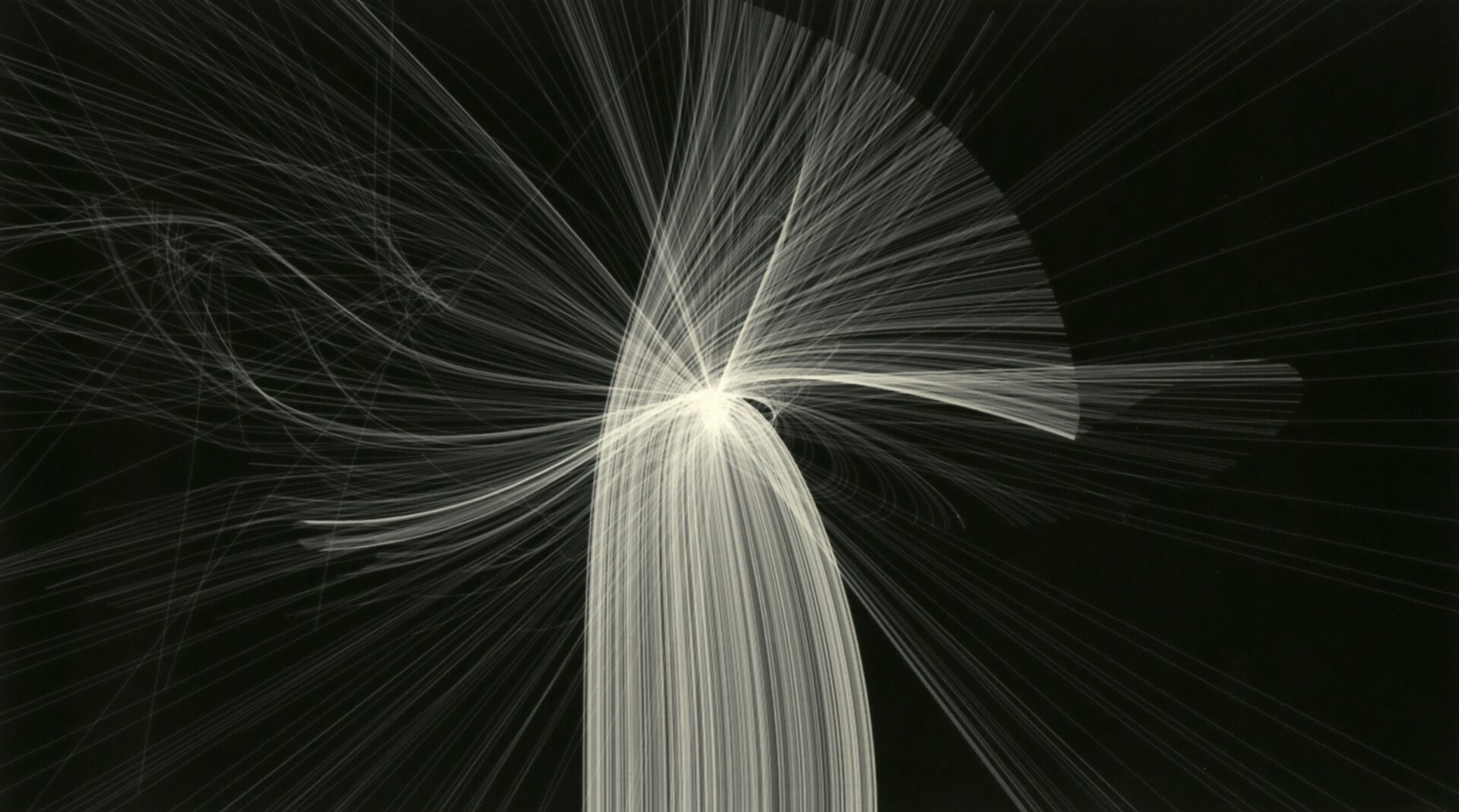
Our Sensational Fibers- Our bodies are intricate networks of fibers, a hidden scaffolding that significantly affects both our health and posture. Indeed, this fibrous architecture profoundly defines our physical experience. While bones and muscles provide readily visible structure and movement, it’s easy to overlook the bigger picture. However, beneath the surface lies this hidden scaffolding, a matrix of fibers, dictating far more than we often realize.
Consider a forest, where trees grow together, intertwined, yet remain separate, never actually touching. Similarly, the Extracellular Matrix (ECM) and fascia within us form a sensational web. This web links every cell, organ, and system, profoundly influencing how “tight, loose, aging, atrophied, or healthy” we are. Consequently, this fibrous architecture truly defines our physical experience, impacting everything from our posture to our susceptibility to disease.
Therefore, join me as we embark on a journey, weaving together ancient philosophies with innovative scientific analysis of our sensational fibers, to unravel the mysteries of this amazing internal world.

I. What is this Matrix of “Sensational Fibers” Anyway & what we hide within?
At its core, this “fibrous matrix” is largely the Extracellular Matrix (ECM) – a complex network of macromolecules and minerals living in the spaces surrounding our cells. Think of it as the ultimate biological glue, the silent support system upon which they built our very existence.
Perhaps a more palatable analogy would be a biological “Jell-O with marshmallows”! The Jell-O, in this case, represents the ECM, that ever-present, supportive goo. The marshmallows? Those are our cells, nestled within this dynamic architectural framework, receiving nourishment and direction from their surroundings.
But what gives this Jell-O its particular properties? The answer lies in its remarkable ingredients:
- Collagen: The “steel girders” of your body. The most abundant protein in the animal kingdom, collagen provides tissues with incredible tensile strength. It’s what keeps us from tearing ourselves apart with every movement.
- Elastic Fibers: The “flexible rebar” or “rubber bands.” These allow our skin, blood vessels, and lungs to stretch and snap back into shape, a testament to the body’s inherent resilience.
- Reticular Fibers: The delicate “fine mesh.” Forming supportive networks in softer organs like your spleen, these fibers provide a crucial framework for cellular function.
But the story doesn’t end with the ECM. There’s another player in this fibrous drama: fascia.
Fascia: The body’s “Gift Wrap”
Envision fascia as the body’s “gift wrap,” a continuous, three-dimensional web of connective tissue that envelops and supports everything – muscles, bones, organs, nerves. Often described as a “liquid crystalline matrix,” fascia is so much more than simple packing material.
It provides separation, preventing friction between tissues; it stores and releases energy, contributing to our effortless movement; and, perhaps surprisingly, it even influences pain sensation. Healthy fascia is relaxed and wavy, allowing for fluid movement. However, trauma or inflammation can cause it to lose elasticity, leading to stiffness and pain, a stark reminder of the interconnectedness of our physical being.
And who are the master builders of this fibrous wonderland? Fibroblasts – the principal cells constantly working to construct and maintain this intricate network. They are the unsung heroes of our internal architecture.

II. A Thread Through Time: How We Used to See Our Sensational Fibers
To truly appreciate the modern understanding of the fibrous matrix, it’s helpful to consider how our ancestors viewed the human body. Before the advent of modern science, our understanding was… different.
Back in ancient Greece, health was all about balancing four bodily fluids: blood, yellow bile, black bile, and phlegm. A fascinating, if somewhat misguided, theory. There was no mention of fibers, no appreciation for the intricate network we now know exists.
Early dissections focused on observable parts – bones, muscles, organs – with the prevailing belief that each possessed a specific, divinely ordained function. The body was seen as a collection of individual components, rather than an integrated whole.
There was also the notion of “pneuma,” a subtle, animating spirit thought to flow through the body, explaining movement and sensation. A poetic concept, perhaps, but one that lacked the scientific rigor to truly unlock the body’s secrets.
The 17th century brought a seismic shift: the arrival of the microscope. Suddenly, scientists could peer into a world previously invisible. As they did, they began to propose that the body was entirely “interwoven with elementary fibers,” a revolutionary idea that challenged the established order. Bernard Connor’s 1697 book on fiber anatomy caused quite a stir!
The concept of “connective tissue” began to solidify in the 1830s, marking a significant step forward in our understanding. However, the mid-1800s saw the rise of cellular theory – the idea that all cells arise from pre-existing cells – which temporarily overshadowed the sensational fibers-centric view. The pendulum of scientific focus swung back and forth, as is often the case in the pursuit of knowledge.

III. The Modern View: Your Body’s Dynamic Architecture
Today, we know that the matrix of sensational fibers is far more than just passive scaffolding. It’s a dynamic, adaptable, and self-repairing system, constantly responding to the demands placed upon it.
Consider the specialized “building blocks” that make up this matrix:
- Bones: Your body’s super-strong, mineralized “load-bearing walls and foundation,” providing the structural integrity that allows us to stand upright.
- Tendons & Ligaments: The tough, parallel “cables and ropes” connecting muscles to bones and bones to bones, ensuring stability and efficient movement.
- Cartilage: The smooth “cushioning and gliding surfaces” in your joints, allowing for frictionless movement and protecting our bones from wear and tear.
- Fascia‘s Grand Comeback: Now recognized as a key player in integrating tissues, influencing movement, and even proprioception – your sense of body position. It’s no longer relegated to the sidelines; fascia is finally taking center stage.
So, how do we keep these fibers happy and healthy?
Hydration is key.
Our connective tissues are approximately 70% water. Proper hydration is crucial for their elasticity and smooth function. Think of a dry sponge versus a wet one – the difference is palpable.
Movement matters. Regular movement helps maintain the health and suppleness of this vital network, preventing stiffness and promoting optimal function. Our bodies are designed to move, and our matrix of sensational fibers thrives on it.

IV. Tangled Threads: Debates and Unexpected Impacts
While the existence of the fibrous matrix is now beyond dispute, scientists are still grappling with the intricacies of its function. The debates have shifted from if it exists, to how it works.
One area of intense research is mechanobiology: how the physical properties of this matrix (like stiffness) influence cell behavior, especially in diseases like cancer and fibrosis. It’s a complex interplay of forces and signals.
Another challenge lies in developing accurate computer models to predict the precise mechanical properties of tissues based on their fibrous components. This is no easy feat, requiring a deep understanding of the matrix’s intricate structure and behavior.
But the story doesn’t end there. The environment also exerts a powerful influence on our fibers, and by extension, on our health.
Environmental toxins can directly damage cells and trigger unhealthy remodeling of the ECM.
Even the microfibers from synthetic clothing are found in our water, our food, and yes, even inside our bodies. Are they silent health threats, potentially leaching chemicals or impacting lung function? The full story is still unfolding, but the implications are concerning.
The textile industry’s production and disposal of fibers, both natural and synthetic, have massive environmental footprints, indirectly impacting human health globally. These are the invisible threads that connect our personal choices to the wider world.
The WHO estimates that a staggering 1 in 4 global deaths are linked to unhealthy environments – from air pollution to poor sanitation and climate change.
This raises profound philosophical questions. Do we protect the environment solely for our own benefit (anthropocentrism), or does nature possess intrinsic value (ecocentrism)? The truth, perhaps, lies somewhere in between. Our health and nature’s health are inextricably linked.

V. Weaving the Future: What’s Next for Your Body’s Sensational Fibrous Network?
The future of fibrous matrix research is brimming with possibilities.
- Next-generation imaging techniques, like super-resolution microscopy, are allowing us to visualize fibers at the nanoscale, creating incredibly detailed three-dimensional maps of our body’s web.
- Artificial intelligence will soon be able to analyze complex tissue images faster and more accurately, leading to earlier detection of diseases like cancer and fibrosis.
- Scientists are designing “smart” biomaterials, like ECM-derived hydrogels, and using 3D bioprinting to create custom-made tissues and implants that perfectly mimic natural fibrous structures. Imagine growing new organs with ideal scaffolding!
- Genetic engineering holds the promise of tailoring fibrous proteins for new medical breakthroughs, from drug delivery to regenerative medicine.
- Connectomics, a field famous for brain mapping, will expand to map intricate fibrous networks throughout the entire body, offering a holistic understanding of organ function and disease.
- The Internet of Bio-NanoThings (IoBNT) envisions a future where tiny bio-nanodevices inside your body detect diseases and transmit real-time health data from within your fibrous matrix!
All these advancements are paving the way for more precise diagnoses and highly personalized treatment plans, tailored to your unique fibrous system.

Conclusion: The Unfolding Story of Your Amazing Body
From ancient theories to the cutting edge of science, the “matrix of sensational fibers” is fundamental to who you are, how you move, how you heal, and how your environment impacts your very existence.
Your body isn’t just a collection of parts; it’s a dynamic, interconnected, and awe-inspiring web. Understanding its secret threads is key to a healthier future for us all. The story of our fibrous matrix is still unfolding, and I, for one, am eager to see what the future holds.
How does the physical connect with your “moral fiber”? This will be a topic for another Spiritual Depth Movement article, and here’s a sneak peek at an article that is loosely connected to this. External link
For now, here’s another SDM self-care article which you might have missed. Internal link